Senin, 30 Oktober 2006

Full Cast

In credits order:

Richard Todd :- Robin Hood

Joan Rice:- Maid Marian

Peter Finch:- Sheriff of Nottingham

James Hayter:- Friar Tuck

James Robertson Justice:- Little John

Martita Hunt:- Queen Eleanor

Hubert Gregg:- Prince John

Bill Owen:- Stutely

Reginald Tate:- Hugh Fitzooth

Elton Hayes:- Alan A Dale

Anthony Eustrel:- Archbishop of Canterbury

Patrick Barr:- King Richard

Anthony Forwood:- Will Scarlet

Hal Osmond:- Midge the Miller

Michael Hordern:- Scathelok

Clement McCallin:- Earl of Huntingdon

Louise Hampton:- Tyb

Archie Duncan:- Red Gill

Rest of cast in alphabetical order:

John Brooking:- Merrie Man

Ivan Craig:- Merrie Man

David Davies:- Forester

John French:- Merrie Man

Richard Graydon:- Merrie Man

Geoffrey Lumsden:- Merrie Man

John Martin:- Merrie Man

Larry Mooney:- Merrie Man

Nigel Neilson:- Merrie Man

Charles Perry:- Merrie Man

Ewen Solon:- Merrie Man

Julian Somers:- Posse Leader

John Stamp:- Merrie Man

Jack Taylor:- Merrie Man

Bill Travers:- Posse Man

Minggu, 29 Oktober 2006

Behind The Camera

First Unit


Director:- Ken Annakin

Unit Manager:- Frank Sherwin Green

Director of Photography:- Guy Green

Camera Operative:- Dave Harcourt

Technicolor Technician:- Ian Craig

Asst. Technicolor Technician:- John Tiley

Clappers:- Derrick Whitehurst

1st. Assistant Director:- Peter Bolton

2nd. Assistant Director:- Peter Manley

3rd Assistant Director:- Kip Gowan

Continuity:- Joan Davis

Sound Mixer:- C.C. Stevens

Boom Operator:- Fred Ryan

Sound Camera:- K Rawkins

Floor Props:- Jim Herald

Floor Electrician:- Maurice Gillet

Floor Stills:- Frank Bellingham

Production Secretary:- Teresa Bolland


Second Unit

Director:- Alex Bryce

Unit Manager:- Anthony Nelson-Keys

Cinematographer:- Geoffrey Unsworth

Camera Operator:- Bob Walker

Technicolor Technician:- Robert Kindred

Asst. Technicolor Technician:- Michael Brandt

1st. Asst. Director:- Basil Keys

2nd. Asst. Director:- Len Lee

3rd Asst. Director:- Chris Sutton

Boom Operator:- George Paternoster

Continuity:- Connie Newton

Clapper Loader:- Ken Nicholson

Asst. Wardrobe:- Fred Gayton

Hairdresser:- A Baber

Floor Props:- Ernie Quick

Floor Stills:- George Ward

Production Secretary:- Kathleen Hosgood


Screenplay:- Lawrence Edward Watkin

Producer:- Perce Pearce

Executive Producer:- Walt Disney

Editor:- Gordon Pilkington

Asst. Editor:- Ann Coates

2nd Asst. Editor:- Deveril Goodman

2nd Asst. Editor:- Leslie Hodgson

2nd Asst. Editor:- Terry Poulton

Casting Director:-Maude Spector

Casting Asst.:- John Owen

Art Director:- Carmen Dillon

Asst. Art Director:- Arthur Lawson

Asst. Art Director:- Jack Stevens

Costume Design:- Michael Whittaker

Wardrobe Supervisor:- Yvonne Caffin

Wardrobe Master:- Goff Price

Wardrobe Mistress:- Mrs Gilbert

Wardrobe Assistant:- Betty Simms

Wardrobe Assistant:- Roy Lemon

Period Advisor:- Charles R. Beard

Makeup Supervisor:- Geoffrey Rodway

Makeup Artist:- Trevor Crole-Rees

Makeup Artist:- Stuart Freeborn

Makeup Artist:- Eddie Knight

Makeup Artist:- A. L. Lawrence

Makeup Artist:- Robert Alexander

Makeup Artist:- Molly Schneiderman

Production Manager:- Douglas Peirce

Chief Draughtsman:- Ernest Archer

Sketch Artist:- Ivor Beddos

Sketch Artist:- Stephen Grimes

Asst. Draughtsman:- John Box

Asst. Draughtsman:- Roy Dorman

Asst. Draughtsman:- Don Picton

Junior Draughtsman:- Peter Lamont

Junior Draughtsman:- Richard Frigg

Sound Editor:- Wyn Ryder

Dubbing Mixer:- Peter Davies

Boom Operator:- Basil Fenton-Smith

Sound Editor:- Winston Ryder

Matte Artist:- Peter Ellenshaw

Matte Effect Technician:- Alan Hulme

Matte Effect Technician:- Peter Hall

Scenic Artist:- Robert Dawe

Set Dresser:- Harry White

Technicolor Colour Consultant:- Joan Bridge

Conductor: Royal Philharmonic Orchestra:- Muir Mathieson

Clapper Loader:- John Alcott

Assembly Cutter:- Anne V. Coates

Assistant Camera:- Peter Hall

Focus Puller:- Alan Hume

Still Photographer:- Ian Jeayes

Still Photographer:- George Courtney Ward

Hair Dressing Supervisor:- Vivienne Walker

Hairdresser:- Joyce Wood

Hairdresser:- Joan White

Hairdresser:- Alf Beeber

Hairdresser:- Gordon Bond

Hairdresser:- Ann Fordyce

Hairdresser:- Pearl Tipaldi

Construction Manager:- Gus Walker

Property Master:- Bill Mason

Production Buyer:- Jim Baker

Production Publicist:- Catherine O’ Brien

Production Publicist:- Joan R. Davis

Producers Secretary:- Denise Carey

Casting Secretary:- Pat Bull

Publicity Secretary:- Nita Oswin

Ballads:- Elton Hayes

Ballads:- Clifton Parker

Ballads:- George Wyle

Ballads and Lyricist:- Eddie Pola

Ballads and Lyricist:- Lawrence Edward Watkin

Jumat, 27 Oktober 2006

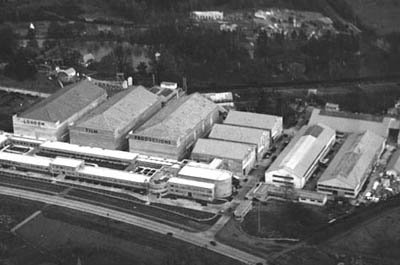
Denham Studios


I was blissfully unaware as I sat in my local ABC cinema in the 1970’s, watching Disney’s live action version of ‘Robin Hood’, that the studios in which this wonderful film was made were being demolished.

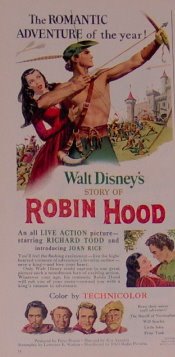
After the Second World War some of the money made by American film companies had been frozen by the British Government, this encouraged the big production companies from America to return to English studios like Denham. Disney’s ‘Story of Robin Hood and his Merrie Men,’ had given the studios a life-line, but sadly, this was the last main feature to be produced at that massive complex.

Denham is located just north of Uxbridge at junction 1 of the M40. It was Hungarian impresario, Alexander Korda (1893-1956) capitalising on his record breaking box office success with ‘The Private Life of Henry VIII’ (1933) and 'The Scarlet Pimpernel’ (1934) who managed to get the funding to build the studios. This movie had earned the first ever Oscar for a British film star, Charles Laughton and a sixteen picture deal for Korda. Who managed to secure funding from the Prudential Assurance Company to underwrite future productions and finance his dream of building his own British film studios.

So Korda purchased a country house and estate at Denham in Buckinghamshire for £15.000 and decided to build a 165 acre complex. The massive Studios were created by Jake Okey, who had previously created the Fist National and Paramount Studios.

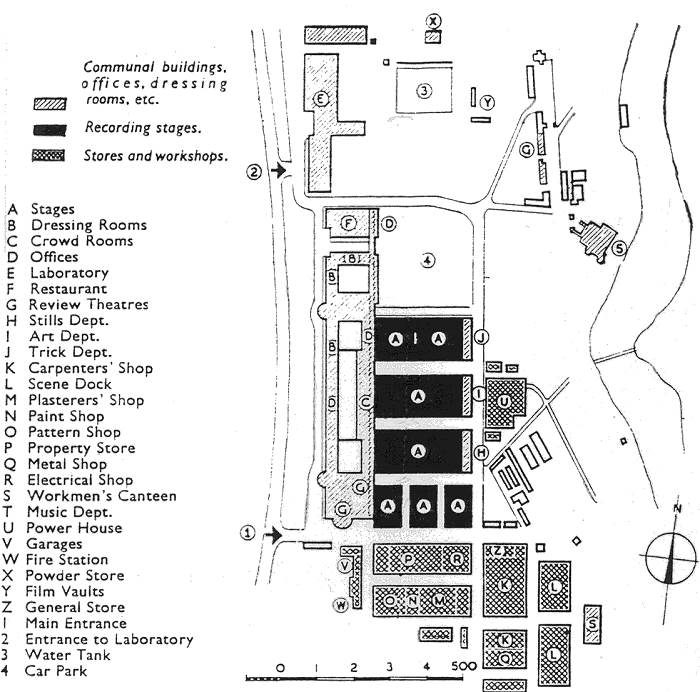
Building work started in late summer of 1935. The River Colne was diverted, to make an elegant pond, which later housed a gift of white swans, given to Korda by Winston Churchill. The stables of the original house were converted to cutting rooms and the site had built, its own electricity generating station and a complete Technicolor laboratory. Its 2,000 employees were instructed by Korda to produce movies of 'prestige, pomp, magic and madness’. To do this they had at their disposal, seven sound stages with a floor area of 120,000 square feet, a massive water tank, many large workshops for scenery construction, restaurants and even a train service from London.

But it wasn’t long before Korda noticed a design fault.
The problem was, that the site was too big. The stages were too far away from the workshops.

But completion of Britain's largest film-making facility was in May 1936 and some noted films started to roll off the production line:

Southern Roses
The Ghost Goes West
Rembrandt
Things To Come
The Man Who Could Work Miracles
Knight Without Armour
A Yank at Oxford
South Riding


Korda established his own catalogue of contracted actors including Leslie Howard, Merle Oberon (whom he married in 1939) Wendy Barrie, Robert Donat, Maurice Evans and Vivian Leigh. But his worst fears became reality as the design layout came under serious criticism and film projects started to dry up. Combined with this, came the infamous film companies crash of 1937. So Prudential stepped in and offered Denham Studios as a going concern to Charles Boot and J. Arthur Rank. Korda’s control of his ‘dream factory’ was effectively taken off his hands as Denham merged with Pinewood. Rank later used Denham chiefly for his Two Cities productions. Some of Britain's most memorable films continued to be made there:

Goodbye Mr Chips
Thief of Baghdad
In Which We Serve
Green for Danger
Black Narcissus
49th Parallel
Red Shoes
The Happy Breed
Blythe Spirit
Henry V
The Life And Death of Colonel Blimp
Brief Encounter


But Denham’s production costs remained far higher than Pinewood.
Pinewood studios were far more compact, grouped around a central construction area, unlike the long walkways between departments at Denham. So after World War II the massive sound stages gradually became neglected.

Technology was also advancing as equipment became lighter and more portable, and the huge studios used in the 30’s and 40’s were no longer needed. J. Arthur Rank was also having serious financial problems and he had more floor space than he could possibly use, so was eager to rid himself of this financial burden. So the Denham offices became the home of Rank Xerox and the only film making tenant was Anvil Films, who used the cutting rooms.

Meanwhile, Alexander Korda, received a knighthood from George VI and continued to have movie success with such films as:

The Third Man
Breaking the Sound Barrier
Bonnie Prince Charlie
Anna Karenina

The National Film Finance Board invested some tax payers cash into the studios but the axe was ready to fall and in 1952 Disney’s ‘Story of Robin Hood and his Merrie Men’ was the last major feature film to be made there.

Aged 63 Alexander Korda died of a massive heart attack four years later. The site of the studios was eventually sold to a developer in 1970 and the whole area was flattened to build an industrial park. Sadly nothing now remains of Korda’s ‘prestige, pomp and madness’.


© Clement of the Glen 2006-2007

Introduction


In the early 1970’s I watched a film at my local cinema that sent me on a historical journey. That film was Walt Disney’s ‘Story of Robin Hood and His Merrie Men’. As a child I had seen other films and read the books, but this film in particular inspired me to research the historical evidence behind one of the most famous legends in the world.

Studying the attempts to find Robin Hood, by many antiquaries and historians, has taken me on a complex, but fascinating path through the dense forest of British history. So using the story from the film, come with me as we journey with Allan A Dale, through the past and see what has been discovered about Robin Hood and how they made that wonderful film.

This is the tale of Robin Hood


"O, I'll sing a song, a rollicky song,
As, I roll along my way,
With a hey derry die 'n' a derry die do
And a riddle de diddle de day!

This is the tale of Robin Hood,
And of his merry men,
His like you are not like to see,
In all the world again."